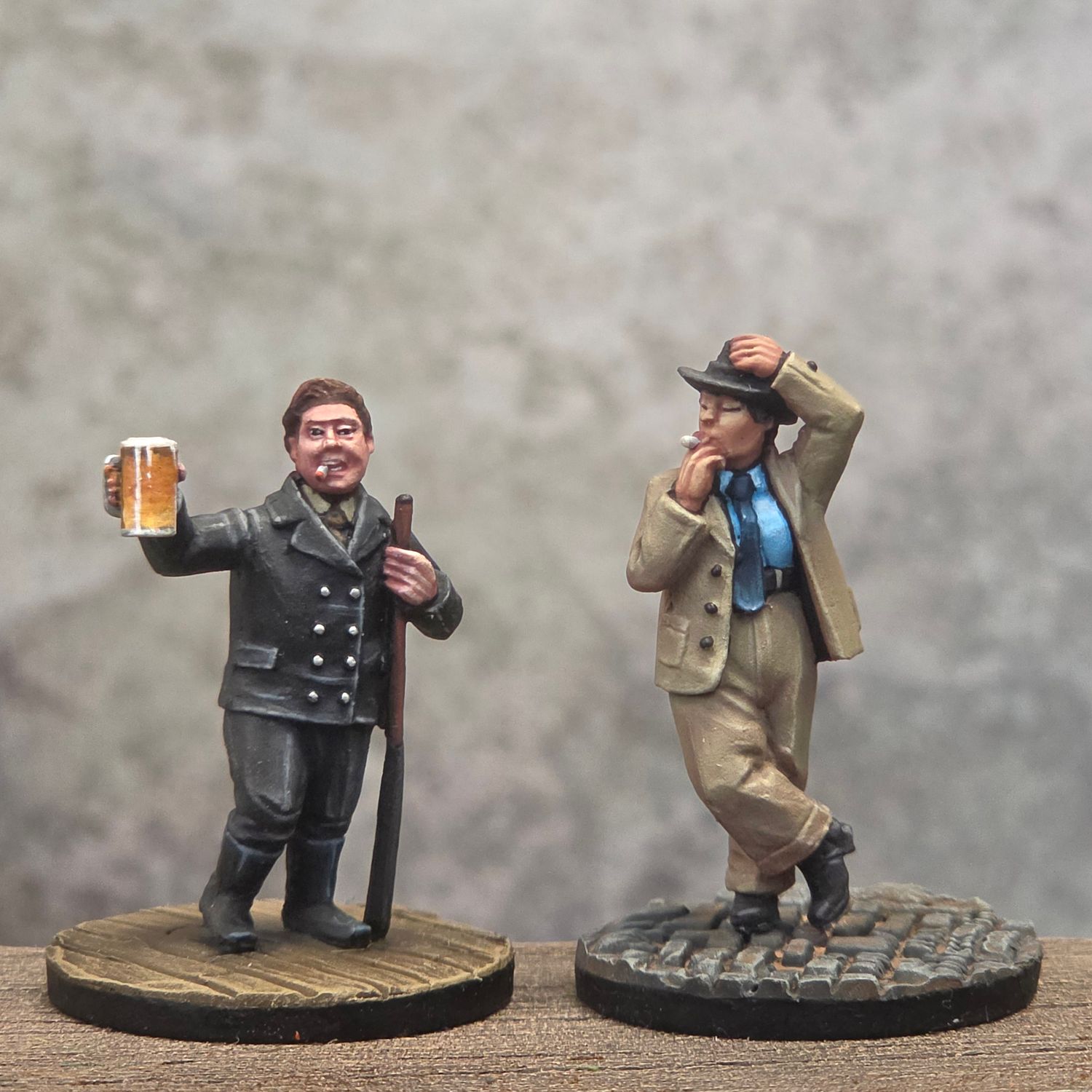
Frieda Belinfante, one of my favourites. An accomplished conductor and cellist, she closed down her orchestra once it was only allowed to continue without the Jewish members. She joined the resistance with fellow artists, musicians, poets and other creatives in Amsterdam forging documents, particularly ID cards.
Her friendship with Willem Arondeus led them to plotting and carrying out the 1943 bombing on the Amsterdam Municipal Register. One of the few to escape, she wasn't there on the night, nor any other women from the gang, as part of the scheme involved dressing as Dutch Police to gain entry [and a woman would have been less inconspicuous].
She survived in hiding, dressed in disguise as a man, so well that she recalls her mother walked past her in the street without recognising her. After three months she began a gruelling trip to a safe house in Switzerland, across Belgium and France in all the back lanes, woodlands and other cover she could find. Including cross the ALPS by foot. In a later interview, Frieda even talks about how she needed to cross a river, but couldn't swim, so she held all her clothes above her head and walked across, hoping it wouldn't get too deep.
Miraculously, she survives the war and ends up in America (I had to cut myself off before this became a full essay!) and founded the Philharmonic Society of Orange County. This wasn't without issue, as even after the war she fought discrimination for being a lesbian.
"But I was a girl" is a film about Freida Belinfante, and has interviews with her in English - it's easy to find online and I highly recommend it.
I noted a bunch of quotes down but one poignant one is:
"Neutrality doesn't exist. If you do nothing, it means you accept the situation".
Available from 21st October in our KS "Heroes of the Dutch Resistance". Hand sculpted by Alan Marsh, cast into pewter, shown painted by John Morris.